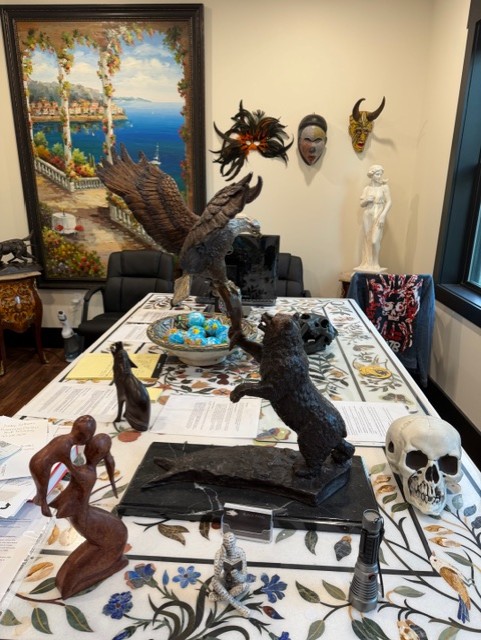
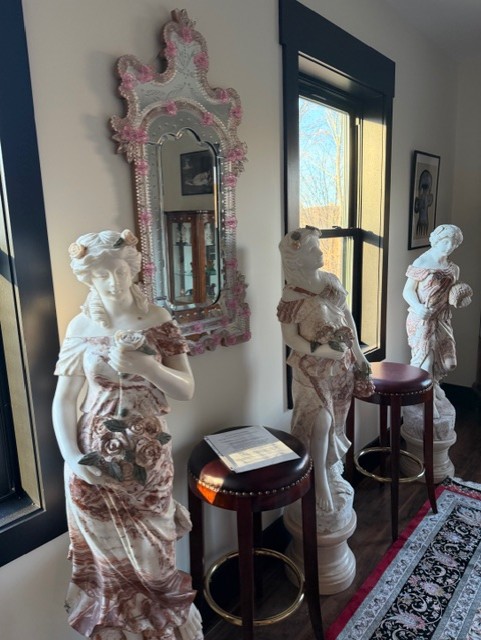
MEDICI MARBLE TABLE
An inlaid marble table featuring a signature or attribution to "Antonio Medici" sits at a fascinating intersection of Italian art history, high-end craftsmanship, and the market for Grand Tour antiquities.
To evaluate a piece like this, it is essential to separate the historical context of the technique from the nature of the signature itself.
1. The Craftsmanship: Pietra Dura vs. Scagliola
Inlaid marble tables from Italy generally fall into one of two highly prized categories:
* Pietra Dura (or Commesso Fiorentino): This is a luxury technique where thin, precisely cut slices of colored marbles and semi-precious stones (like lapis lazuli, jasper, agate, and chalcedony) are fitted together like a jigsaw puzzle to create intricate pictures, floral patterns, or geometric designs. This art form was famously institutionalized and funded by the Medici Grand Dukes of Florence in 1588 through the Opificio delle Pietre Dure.
* Scagliola: A slightly later technique (gaining massive popularity in the 17th and 18th centuries) where a paste made of selenite plaster, glue, and natural pigments is inlaid into a carved marble matrix or base. It mimics pietra dura but allows for incredibly fluid, painted-like detail.
2. Deciphering the "Antonio Medici" Signature
In the realm of antique Italian stone carving, the name "Medici" carries immense historical weight, which introduces a few distinct possibilities for your piece:
Path A: The 19th-Century Grand Tour Artisan
While the Medici family ruled Florence during the Renaissance and Baroque eras as patrons rather than hands-on craftsmen, the 19th century saw a massive revival of these stone arts. During the Grand Tour era, wealthy aristocrats traveled through Italy and purchased micro-mosaics, pietra dura panels, and inlaid tables to ship back to their country estates.
* Several high-end workshops operated out of Florence and Rome, occasionally run by artisans who either married into branches of the historical family name, used it as a proud regional identifier, or were later generations of independent Florentine masters. A signed 19th-century table top by an independent master craftsman named Antonio Medici would be a highly collectable, valuable example of late Neoclassical or Neo-Renaissance decorative art.
3. Key Elements for Authentication
If you are looking to verify or evaluate a table of this description, specialists look for specific structural clues:
* The Underside of the Slab: Look at the bottom of the marble top. Authentic period pieces show hand-saw marks, irregular chisel gouges, and older iron or wood reinforcement bars. A perfectly smooth, mesh-backed, or cleanly machine-cut underside indicates modern production.
* Material Types: Examine the stones. Historic pieces rely on old Roman quarries-using materials like nero antico (deep black marble), giallo antico (yellow), lapis lazuli, and various breccias.
* The Signature Style: Is the signature incised into the stone, written in iron-gall ink on the reverse, or etched into a metal cartouche? Fine art appraisers typically cross-reference the exact script style with recorded regional Guild registries in Florence or Rome.
Collecting Note: If the table features a genuine, hand-fitted pietra dura or scagliola top from the 18th or 19th century, its market value is driven heavily by the complexity of the pattern, the absence of fractures or missing stone pieces, and the quality of the supporting base (often carved giltwood or walnut).