FURNITURE

LIMITED EDITION

BRONZE SCULPTURE

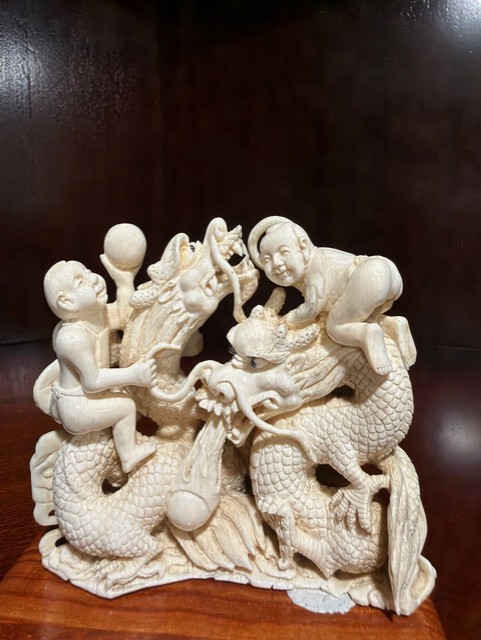
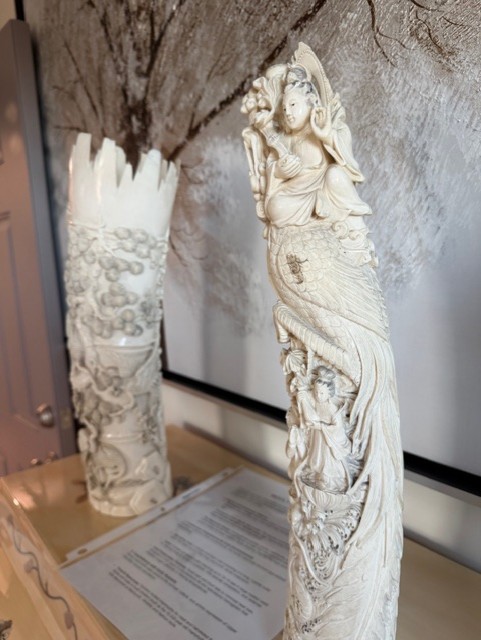
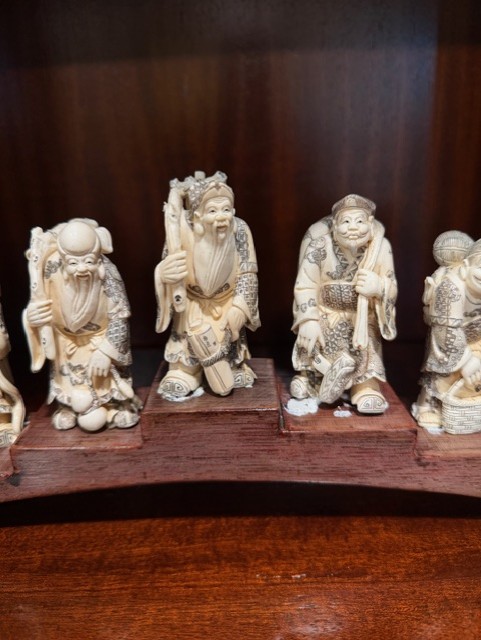
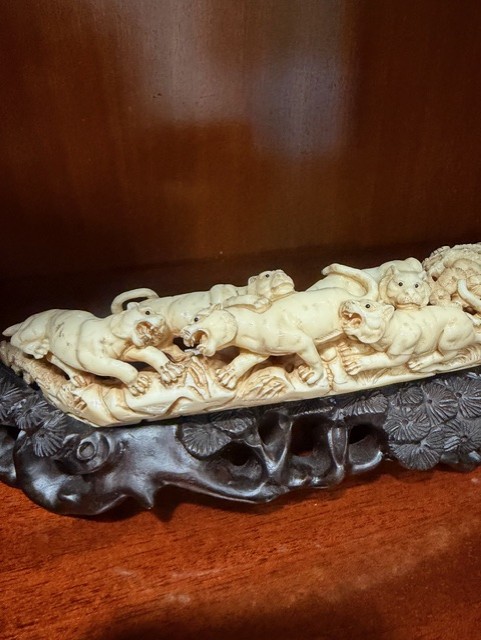
MAMMOTH CARVINGS

FLORENTINE MARBLE

ORIGINAL ART

GLASSWARE

EGYPT

MOROCCO

THAILAND

EUROPE
WOOLY MAMMOTH

The woolly mammoth (Mammuthus primigenius) is one of the most recognizable megafauna of the Pleistocene epoch. Its history spans evolutionary adaptations to extreme cold, coexistence with early humans, and a long decline driven by shifting climates and human hunting.

1. Origins & Evolutionary History
*        Evolutionary Lineage: Mammoths share a common ancestor with Asian elephants (Elephas maximus), from which they diverged roughly 5 million years ago.

*        Emergence of the Woolly Mammoth: The species evolved in East Siberia approximately 300,000 to 700,000 years ago, descending from the earlier Steppe Mammoth (Mammuthus trogontherii).

*        The Mammoth Steppe: During glacial periods, woolly mammoths dominated a biome known as the mammoth steppe-a vast, dry cold grassland extending across northern Eurasia, northern North America, and the Beringia land bridge.

2. Anatomical Adaptations to Cold Environments
To thrive in sub-zero Arctic environments, the woolly mammoth evolved specialized physical traits:

*        Insulating Coat: A dense dual-layer coat consisting of a long, coarse outer guard hair layer (up to 3 feet long) and a soft, dense underwool.

*        Tusks: Curved, elongated tusks (reaching up to 13-14 feet in large males) used for clearing snow to forage on grasses, intra-species competition, and defense.

*        Cold Preservation Features: Small ears and short tails to minimize heat loss, alongside a 3-inch layer of subcutaneous fat and specialized hemoglobin that released oxygen efficiently in freezing temperatures.

3. Coexistence with Early Humans
Woolly mammoths were central to the survival, culture, and artistic expression of Upper Paleolithic human populations:

*        Food & Resources: Humans hunted mammoths for meat and harvested their bones and tusks to build shelters (such as the 15,000-year-old mammoth bone huts discovered at Mezhyrich, Ukraine) and fashion tools.

*        Prehistoric Art: Mammoth ivory was one of the earliest mediums for human sculpture, used to carve animal figurines, Venus statuettes, and personal ornaments. Mammoths were also prominently depicted in cave paintings, such as those at Chauvet and Rouffignac in France.

4. Extinction Timeline
The decline of the woolly mammoth was driven by a combination of rapid climate warming at the end of the last Ice Age and increasing hunting pressure from expanding human populations.

*        Continental Extinction (~10,000 Years Ago): As the ice sheets retreated around 11,700-10,000 years ago, warming temperatures transformed the dry grasslands of the mammoth steppe into wet tundra and forest, shrinking the mammoth's suitable habitat. Mainland populations across Eurasia and North America died out during this transition.

*        Island Relict Populations:

*        St. Paul Island (Alaska): A small population survived in isolation until about 5,600 years ago, dying out when rising sea levels depleted their freshwater supply.

*        Wrangel Island (Siberia): The last surviving relict population persisted in isolation in the Arctic Ocean until approximately 4,000 years ago (c. 2000 BCE), vanishing due to genetic bottlenecking, inbreeding, and extreme weather events.

5. Modern Science & Fossil Discovery
Because many mammoths were preserved in Siberian and North American permafrost, scientists have recovered remarkably intact frozen specimens containing skin, hair, internal organs, and preserved stomach contents. This preservation allowed researchers to sequence the full woolly mammoth genome, making it a primary candidate for de-extinction and comparative genetic research.


The black-ink inscription on this carving reads 恆藝 (Héng Yì in Traditional Chinese characters).
Inscription Breakdown & Context
*        Characters:
*        恆 (Héng): Enduring, constant, or persistent.
*        藝 (Yì): Art, craft, or skill.
*        Meaning: Translates to "Enduring Art" or "Everlasting Craft."
*        Significance: This is a studio brand mark or workshop signature (kuǎnshí / 款识) associated with modern Chinese master carving studios (such as Heng Yi Studio). High-end modern mammoth ivory workshops in China commonly carve and ink this emblem directly near the base to mark original hand-carved workshop production.
Material & Craft Observations from the Image
*        Base/Root Section: The porous, honeycomb-like texture at the very bottom represents the natural root/pulp cavity section of the tusk or fossil core where the bone-like nerve structure attaches.
*        Stand & Figure: The piece rests on a custom-carved dark hardwood display stand (zitan or blackened rosewood style), typical for genuine display-grade Chinese carvings.
Legal Status: Mammoth ivory comes from an extinct species (Mammuthus primigenius) and is distinct from modern elephant ivory. While legal to own and trade federally in the United States, several states (including New York, California, New Jersey, and Hawaii) restrict or ban the sale of all ivory products regardless of origin.
Physical Supply of Raw Mammoth Ivory
*        Abundant in Nature, Restricted in Commerce: Millions of woolly mammoths remain preserved in Siberian permafrost. Tens of metric tons of raw tusk material are excavated annually.
*        Usable Material is Scarce: Only a small percentage of excavated mammoth tusks are "Grade A" gem-quality (solid, un-cracked interior core) suitable for deep, intricate 10-20 inch carvings. Most fossilized tusks are weathered, split, or brittle, making large, pristine carvings relatively hard to manufacture.
The "Authenticity" Ratio (Real Mammoth vs. Imitations)
*        High Prevalence of Synthetics and Bone: In the secondary market (online estate sales, flea markets, general auctions), over 70% of items marketed as "mammoth" or "ivory" with Chinese inscriptions are modern reproductions made from molded poly-resin, composite stone powder, or carved ox/camel bone.

*        Summary Checklist to Confirm What You Have
Authentic Mammoth Ivory hasSchreger LinesDistinct cross-hatching under surface (<90° angles)Weight & TouchHeavy, dense, noticeably coldHot Needle TestSmells like burnt hair/bone; does not
Japanese netsuke (or small figure) depicting a crawling/sprawling child or figure.
1. Inscription Translation & Artist Mark
*        Characters: 光之 (Mitsuyuki in Japanese kanji).
*        Reading / Name: Mitsuyuki (光之).
*        Significance: Mitsuyuki was a recognized Japanese carver active during the late Edo to Meiji period (19th to early 20th century) known for detailed netsuke and small ivory/wood carvings. The two-character signature is incised directly into the underside/thigh section and filled with dark reddish-brown lacquer pigment.
2. Decorative Details & Context
*        Clothing Patterns: Surrounding the red-inked signature are incised geometric patterns representing the decorated textile folds of a traditional child's garment (kimono or haragake apron).
*        Subject: The bare legs, detailed toes, and rounded posture are typical of Japanese Karako (Chinese-style child) figures or crawling infant toggles (netsuke)